


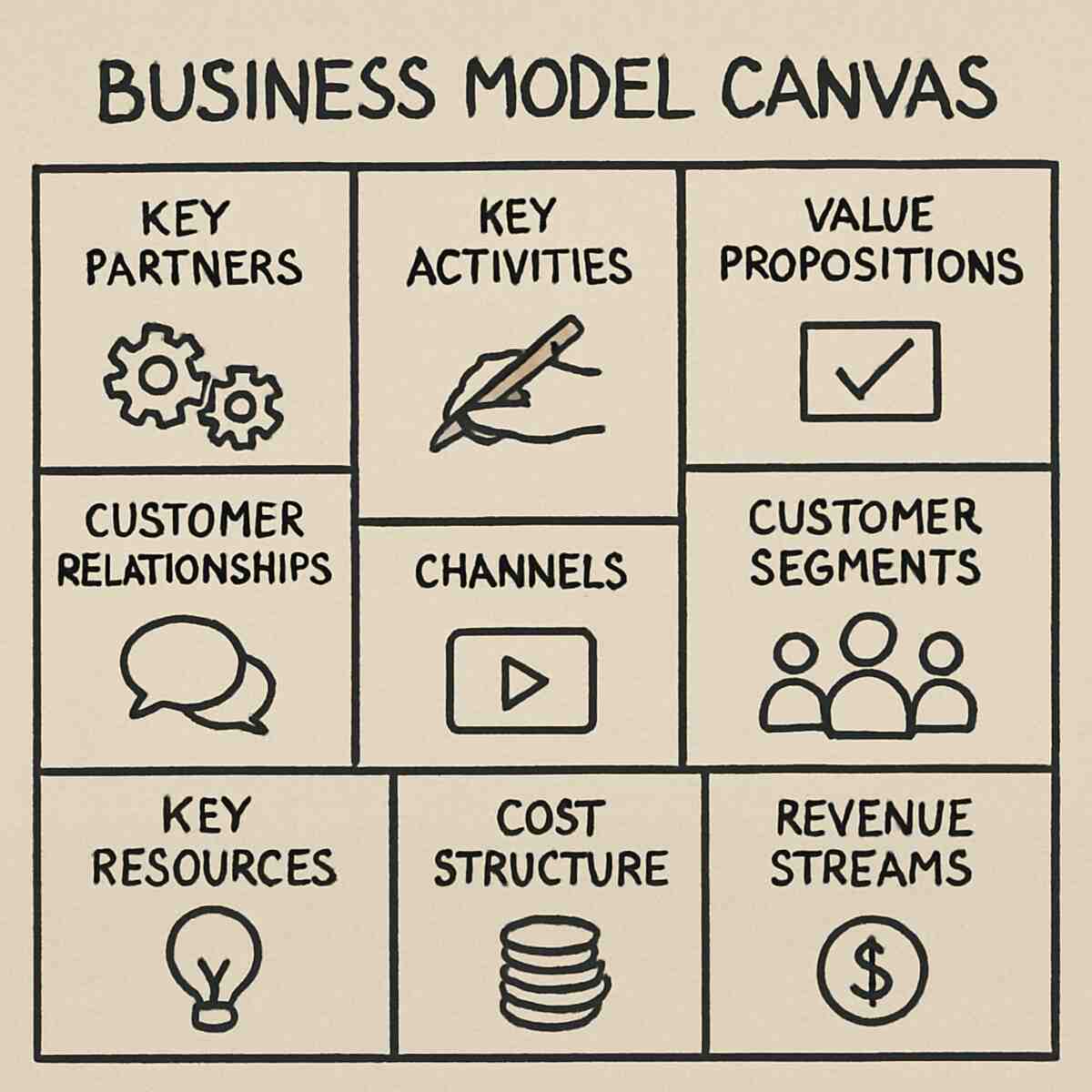
The Business Model Canvas (BMC) is an indispensable tool for entrepreneurs and business strategists. It allows businesses to conceptualize and articulate their business models effectively. This visual framework aids in organizing and aligning the various components of a business, ensuring a cohesive approach to strategic planning. Understanding the BMC and its components is crucial for any entrepreneur aiming to construct a robust and scalable business model. This article delves into the fundamental components of the Business Model Canvas and explores how they contribute to effective business model development. Best way to find the Business Model Canvas Training.
The Business Model Canvas is a strategic management tool developed by Alexander Osterwalder and Yves Pigneur. It provides a comprehensive overview of a business, helping companies visualize and analyze their business models in a straightforward and structured way. The BMC is divided into nine key components, each representing a building block of a successful business model.
Origins and Development
The concept of the Business Model Canvas emerged from a need to simplify the complexities of business model development. Alexander Osterwalder and Yves Pigneur, through extensive research and collaboration with industry experts, crafted this tool to address the dynamic nature of business environments. The BMC has since become a staple in strategic planning across various industries.
Key Features and Benefits
The BMC is lauded for its simplicity and effectiveness. By providing a one-page overview, it encourages clarity and focus, enabling teams to quickly grasp the essentials of a business model. Its visual nature aids in identifying gaps and opportunities, fostering innovation and strategic alignment. Businesses benefit from its iterative nature, allowing continuous refinement and adaptation to market changes.
How It Differs from Traditional Business Plans
Traditional business plans are often lengthy and complex, focusing on detailed financial projections and operational plans. In contrast, the BMC offers a more agile and flexible approach, emphasizing key strategic elements and their interconnections. This makes it particularly useful for startups and growing businesses that need to pivot quickly in response to market feedback.
The Nine Components of the Business Model Canvas
Understanding the nine components of the Business Model Canvas is essential for developing a comprehensive business strategy. Each component plays a vital role in the overall business model, ensuring that all aspects of the business are considered and aligned.
1. Customer Segments
At the core of any business is its customers. The Customer Segments component identifies the different groups of people or organizations a business aims to reach and serve. Understanding your customer segments is crucial for tailoring your value propositions and ensuring your products or services meet the specific needs of each segment.
Identifying and Understanding Customer Segments
Identifying customer segments involves analyzing demographic, geographic, and psychographic data to pinpoint distinct groups. Businesses must consider factors like age, income, location, interests, and purchasing behaviors to define their segments accurately. Understanding these segments enables companies to craft targeted marketing strategies and personalize customer experiences.
Segment Prioritization and Targeting
Not all customer segments hold equal value for a business. Prioritizing segments based on potential profitability, size, and alignment with the company’s goals is critical. Businesses should focus their resources on high-priority segments, developing tailored strategies to engage and retain these customers effectively.
Evolving Customer Segments
Customer preferences and behaviors are not static. Businesses must remain vigilant and adaptable, regularly reassessing their customer segments to identify shifts in the market. This ongoing analysis ensures that businesses remain relevant and responsive to changing customer needs and expectations.
2. Value Propositions
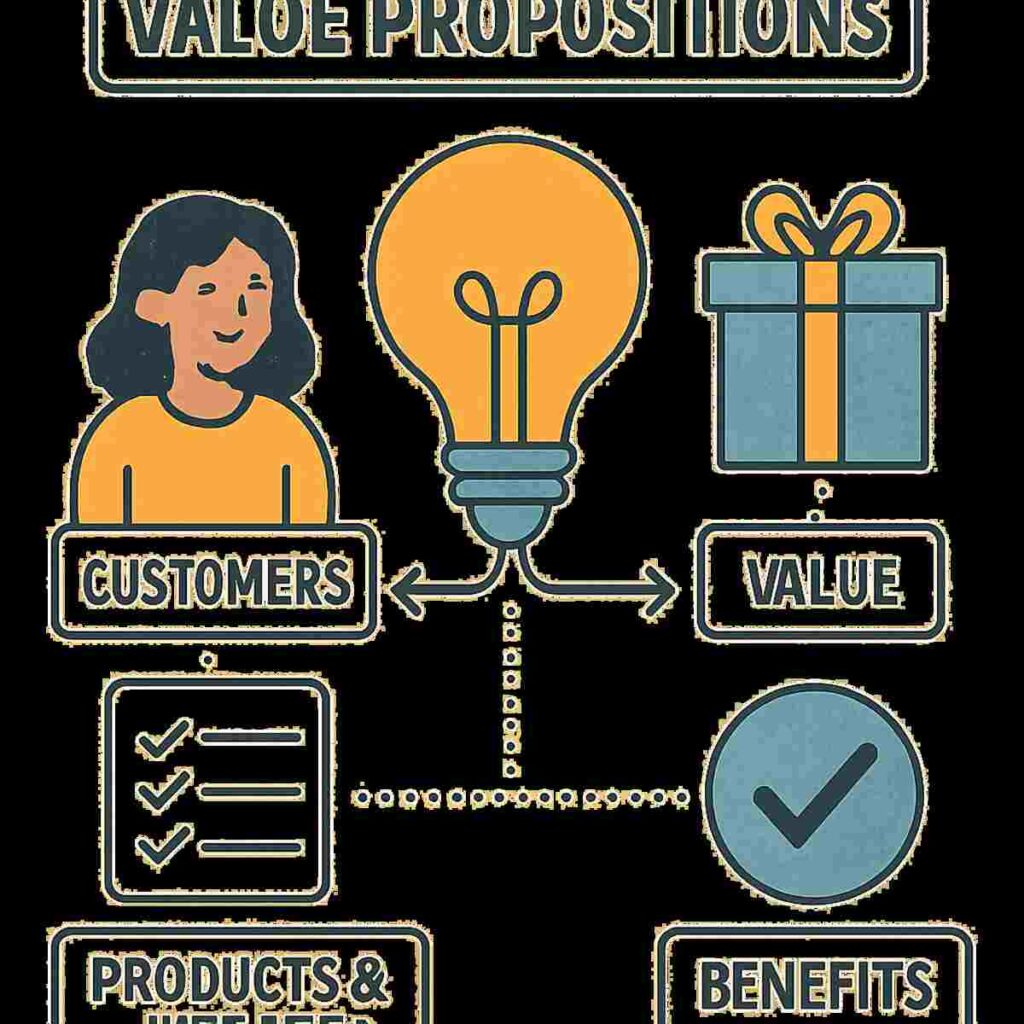
The Value Propositions component describes the unique value a business offers to its customers. It defines why customers should choose your product or service over competitors. A strong value proposition clearly articulates the benefits and solutions your offering provides, addressing the customer’s pain points and needs.
Crafting Compelling Value Propositions
A compelling value proposition succinctly communicates the unique benefits of a product or service. It should highlight how the offering solves a specific problem or fulfills a need better than competitors. Effective value propositions resonate with customers, creating a strong emotional and rational appeal.
Testing and Refining Value Propositions
Value propositions should be tested and refined based on customer feedback and market research. Experimenting with different messaging and positioning can provide insights into what resonates most with your audience. Continuous refinement ensures that your value proposition remains relevant and compelling.
Differentiation and Competitive Advantage
A strong value proposition sets a business apart from its competitors. By emphasizing unique features, benefits, and experiences, businesses can create a competitive edge. This differentiation is crucial for attracting and retaining customers in a crowded marketplace.
3. Channels
Channels refer to the means by which a business delivers its value proposition to its customers. This includes all the touchpoints through which a customer interacts with a company, such as sales channels, distribution networks, and communication platforms. Effective channel management ensures that customers can access your products or services efficiently and conveniently.
Selecting the Right Channels
Selecting the right channels involves understanding where your customers are and how they prefer to interact with your business. This might include online platforms, physical stores, or direct sales. The right mix of channels ensures broader reach and accessibility for your customers.
Integrating Channels for Seamless Experience
An integrated channel strategy provides a seamless experience across different touchpoints. Ensuring consistency in messaging, branding, and customer service across channels enhances customer satisfaction and loyalty. Businesses should strive for a cohesive omnichannel approach that meets customers wherever they are.
Measuring and Optimizing Channel Performance
Regularly measuring and analyzing channel performance is essential for optimization. Businesses should track metrics such as conversion rates, customer engagement, and sales volume across channels. This data-driven approach allows for strategic adjustments to maximize efficiency and effectiveness.
4. Customer Relationships
Building and maintaining relationships with customers is vital for long-term success. The Customer Relationships component outlines the types of relationships a business establishes with its customer segments, ranging from personal assistance to automated services. Establishing the right type of relationship is key to customer satisfaction and loyalty.
Types of Customer Relationships
Customer relationships can range from personal, hands-on interactions to automated self-service options. Businesses should determine the appropriate type of relationship for each segment, considering factors like customer expectations and the nature of the product or service. Personal relationships may be more suitable for high-value customers, while automation might work for routine transactions.
Building Trust and Loyalty
Trust and loyalty are foundational to strong customer relationships. Businesses can cultivate these by delivering consistent value, maintaining transparency, and actively engaging with customers. Loyalty programs and personalized experiences further strengthen customer bonds, encouraging repeat business and advocacy.
Managing Customer Feedback and Engagement
Actively seeking and managing customer feedback is crucial for relationship management. Businesses should establish channels for customers to express their opinions, concerns, and suggestions. Responding promptly and effectively to feedback demonstrates a commitment to customer satisfaction and continuous improvement.
5. Revenue Streams
Revenue Streams represent the various ways a business earns money from its customer segments. This component identifies how each customer segment is willing to pay and highlights the pricing mechanisms and payment structures that best fit each segment. Understanding your revenue streams is crucial for ensuring sustainable profitability.
Exploring Different Revenue Models
Businesses can explore various revenue models, such as subscription, licensing, pay-per-use, and freemium models. Each model has its advantages and challenges, and the choice should align with customer preferences and business goals. Diversifying revenue streams can also reduce risk and enhance financial stability.
Pricing Strategies and Structures
Effective pricing strategies consider factors like cost, competition, perceived value, and customer willingness to pay. Businesses should experiment with different pricing structures, such as tiered pricing, bundling, or discount strategies, to find the optimal approach for maximizing revenue.
Adapting to Market Changes
Market dynamics can influence revenue streams, necessitating flexibility and adaptability. Businesses must monitor industry trends, competitor pricing, and economic conditions to adjust their revenue strategies accordingly. This proactive approach ensures continued profitability in changing environments.
6. Key Resources
The Key Resources component outlines the assets and resources essential for delivering value propositions, reaching customer segments, and maintaining customer relationships. This includes physical, intellectual, human, and financial resources. Identifying key resources helps businesses allocate resources efficiently and effectively.
Identifying Critical Resources
Identifying critical resources involves assessing what is necessary for business operations and growth. These resources can be tangible, such as equipment and facilities, or intangible, like intellectual property and brand reputation. Understanding resource needs helps prioritize investments and focus on what drives value.
Leveraging Human Resources
Human resources are a vital component of key resources. Attracting, developing, and retaining talent is essential for executing business strategies and maintaining competitive advantage. Investing in employee training, engagement, and well-being fosters a productive and innovative workforce.
Managing Financial Resources
Financial resources underpin a business’s ability to operate and expand. Effective financial management includes budgeting, forecasting, and capital allocation. Businesses must ensure they have adequate funding to support operations, invest in growth opportunities, and navigate financial challenges.
7. Key Activities
Key Activities describe the critical actions a business must perform to operate successfully. These activities are directly related to creating and delivering value propositions, maintaining customer relationships, and generating revenue. They include production, problem-solving, platform/network management, and more.
Streamlining Production and Operations
Production and operations are core activities for delivering products or services. Streamlining these processes through efficiency improvements, technology adoption, and quality control ensures reliable and cost-effective outputs. Continuous optimization of operations is crucial for maintaining competitive advantage.
Enhancing Problem-Solving Capabilities
Problem-solving is an integral activity, especially in dynamic and competitive markets. Businesses should cultivate a culture of innovation and creativity, empowering teams to identify and address challenges proactively. Implementing structured problem-solving methodologies can lead to more effective solutions.
Managing Platforms and Networks
For businesses reliant on digital platforms and networks, effective management is key to success. This involves maintaining robust IT infrastructure, ensuring cybersecurity, and optimizing user experiences. Businesses should also leverage partnerships and collaborations within their networks to enhance value delivery.
8. Key Partnerships
Collaborations and partnerships play a crucial role in enhancing business operations. The Key Partnerships component identifies external companies or suppliers that contribute to the success of a business model. Establishing strategic alliances can help businesses reduce risk, acquire resources, and optimize operations.
Identifying Strategic Partners
Identifying strategic partners involves assessing potential collaborators that align with business goals and values. These partners can include suppliers, distributors, technology providers, or industry associations. Selecting the right partners is crucial for creating synergies and driving mutual success.
Building and Sustaining Partnerships
Building strong partnerships requires trust, transparency, and effective communication. Businesses should establish clear expectations, roles, and responsibilities with their partners. Regular collaboration and relationship management ensure partnerships remain beneficial and aligned with evolving business needs.
Leveraging Partnerships for Innovation
Partnerships can be a source of innovation and competitive advantage. By collaborating with partners, businesses can access new technologies, markets, and expertise. These collaborations can lead to the development of innovative products, services, and business models that enhance value for customers.
9. Cost Structure
The Cost Structure component outlines the major costs involved in operating a business model. This includes fixed and variable costs associated with key resources, activities, and partnerships. Understanding your cost structure is essential for pricing strategies and ensuring the financial viability of your business.
Analyzing Fixed and Variable Costs
Analyzing fixed and variable costs helps businesses understand their cost drivers and financial obligations. Fixed costs remain constant regardless of production levels, while variable costs fluctuate with business activity. Identifying these costs enables businesses to manage expenses and improve profitability.
Cost Management and Optimization
Effective cost management involves finding ways to reduce expenses without compromising quality or value. Businesses should explore cost-saving initiatives, such as process improvements, supplier negotiations, and technology investments. Optimizing the cost structure enhances financial performance and sustainability.
Aligning Costs with Strategic Goals
Cost structures should align with a business’s strategic goals and objectives. This involves ensuring that spending supports key priorities, such as growth, innovation, or market expansion. Businesses must regularly evaluate their cost structures to ensure they remain aligned with evolving strategies.
Implementing the Business Model Canvas in Business Model Development
The Business Model Canvas provides a holistic view of a business, allowing entrepreneurs to visualize and analyze each component’s interrelations. Here are some strategies for effectively implementing the BMC in your business model development process:
Step-by-Step Approach
Begin by filling out each component of the BMC with concise and relevant information. Start with customer segments and value propositions, as these are the foundation of your business model. Proceed to channels, customer relationships, and revenue streams, and then address key resources, activities, partnerships, and cost structure. This step-by-step approach ensures a comprehensive understanding of your business model.
Initial Brainstorming and Research
Before filling out the BMC, conduct initial brainstorming sessions and research to gather insights on each component. Involve cross-functional teams to provide diverse perspectives and foster a collaborative environment. This preparation stage lays the groundwork for a more informed and effective BMC development process.
Sequential Filling and Focus Areas
Sequentially address each component of the BMC, focusing on one area at a time. Begin with the most critical components, such as customer segments and value propositions, to establish a strong foundation. This focused approach allows for a deeper understanding and more precise articulation of each element.
Reviewing and Refining the Canvas
After completing the initial BMC, review and refine each component to ensure accuracy and alignment with business goals. Seek feedback from stakeholders and industry experts to validate assumptions and identify potential improvements. This iterative refinement process enhances the overall quality and effectiveness of the BMC.
Continuous Iteration and Feedback
The BMC is not a static document; it should evolve as your business grows and adapts to market changes. Regularly revisit and update each component based on feedback from customers, partners, and stakeholders. Continuous iteration allows you to refine your business model and make data-driven decisions.
Establishing Feedback Mechanisms
Implement feedback mechanisms to gather insights from various sources, including customers, employees, and partners. These mechanisms can include surveys, interviews, and focus groups. Regular feedback collection ensures that the BMC remains relevant and responsive to changes in the business environment.
Iterative Improvements and Adjustments
Based on feedback, make iterative improvements and adjustments to the BMC. This may involve revising value propositions, exploring new customer segments, or optimizing cost structures. Continuous iteration ensures that the business model evolves with the market, enhancing its resilience and competitiveness.
Monitoring Market Trends and Dynamics
Stay informed about market trends and dynamics that may impact your business model. Regularly monitor industry developments, competitor activities, and consumer behavior. This proactive approach allows for timely adjustments to the BMC, ensuring alignment with external changes and opportunities.
Collaborative Workshops
Engage your team in collaborative workshops to brainstorm and discuss each component of the BMC. Involving diverse perspectives can lead to innovative ideas and solutions. These workshops facilitate a shared understanding of the business model and foster a culture of collaboration and innovation.
Planning and Facilitating Workshops
Plan and facilitate workshops that encourage open dialogue and idea sharing among team members. Use structured activities and prompts to guide discussions and maintain focus. A skilled facilitator can help ensure that all voices are heard and that the workshop yields actionable insights.
Encouraging Cross-Functional Participation
Encourage participation from cross-functional teams, including marketing, sales, operations, and finance. This diverse representation ensures that all aspects of the business model are considered and that different perspectives are integrated. Cross-functional collaboration fosters a holistic understanding of the business.
Documenting and Implementing Outcomes
Document the outcomes of workshops, including key insights, action items, and proposed changes to the BMC. Develop a plan for implementing these outcomes, assigning responsibilities and timelines. Following through on workshop results ensures that valuable insights are translated into tangible improvements.
Practical Exercises for Entrepreneurs
To enhance your understanding and application of the Business Model Canvas, consider incorporating practical exercises and case studies into your training for entrepreneurs. Analyzing real-world examples of successful business models can provide valuable insights and inspiration for your own business model development.
Case Study Analysis and Discussion
Incorporate case studies of successful businesses that have effectively used the BMC. Analyze these examples to identify key success factors and lessons learned. Discuss how these insights can be applied to your own business model development, fostering a deeper understanding of BMC application.
Hands-On BMC Workshops
Conduct hands-on BMC workshops where entrepreneurs can work on developing their own business models. Provide guidance and support as participants fill out each component of the BMC. These practical exercises offer valuable experience and build confidence in using the BMC.
Peer Feedback and Iteration
Encourage peer feedback during practical exercises, allowing entrepreneurs to share their BMCs and receive constructive input. This collaborative approach promotes learning and refinement, enabling participants to iterate on their business models and enhance their strategic thinking.
Conclusion
The Business Model Canvas is a powerful tool for entrepreneurs seeking to develop and refine their business models. By thoroughly understanding and applying the nine components, businesses can create robust and scalable models that meet the needs of their customers and drive long-term success. Whether you’re an aspiring entrepreneur or an established business leader, mastering the Business Model Canvas is an essential step in achieving business excellence.
